


While replacement of a fractured porcelain crown remains the ideal treatment option in many cases, it is not always practical for every patient. The financial impact of replacing an existing restoration can be significant, particularly in today's economic climate where patients are increasingly seeking solutions that balance quality care with affordability.
As a result, porcelain repair procedures have become a valuable, conservative alternative that can restore function and aesthetics while extending the life of an existing restoration.
When repairing chipped porcelain crowns, patients expect a solution that is fast, cost-effective, and virtually indistinguishable from the original restoration. In today’s dental world, where aesthetics and efficiency matter more than ever, clinicians are increasingly turning to simplified techniques and universal materials to deliver predictable, highly aesthetic results while avoiding the time, expense, and invasiveness associated with complete replacement.
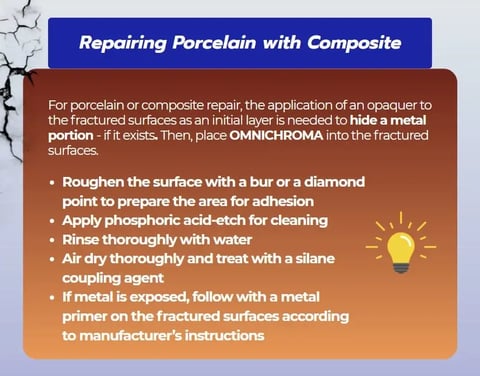
A successful porcelain or composite repair begins with careful evaluation of the fractured surface. Surface preparation plays a critical role in ensuring long-term success. The affected area should first be roughened using a bur or diamond point to create micro-retentive features to enhance the bonding potential. Following this, phosphoric acid etch is applied to thoroughly clean and condition the surface. Proper rinsing is key, and the area must then be completely air dried to eliminate any moisture that could interfere with adhesion.
Once the surface is clean and dry, the application of a silane coupling agent becomes the next important step, particularly when working with porcelain. Silane improves the chemical bond between the ceramic surface and the composite material, contributing to a more durable and reliable repair. In situations where metal is part of the restoration, a metal primer should also be used according to the manufacturer’s instructions to further strengthen the bond.
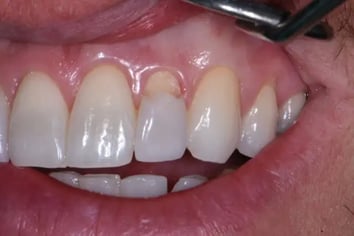
With the surface fully prepped, the next step is to evaluate whether any underlying discoloration, dark dentin, or restorative material may influence the final esthetic outcome. In these situations, applying an opaquer such as OMNICHROMA BLOCKER as the initial layer is essential to neutralize the underlying shade and establish a more natural foundation for the restoration. Proper use of OMNICHROMA BLOCKER helps prevent unwanted show-through and ensures optimal shade integration, allowing the final restoration to blend seamlessly with the surrounding dentition.
 |
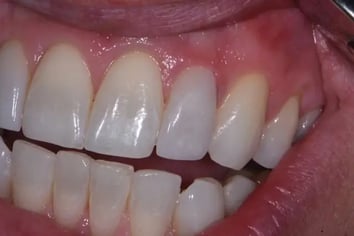 |
(Courtesy of Dr. Peter Auster, Pomona, NY)
Incorporating materials like OMNICHROMA can offer a distinct advantage to your workflow. Known for its ability to blend seamlessly with surrounding tooth structure, OMNICHROMA reduces the complexity traditionally associated with shade matching. Instead of relying on multiple composite shades, clinicians can achieve highly aesthetic results with a single material, simplifying both the procedure and inventory management.
As costs continue to rise and demand for efficient care increases, having reliable, easy-to-use materials becomes essential. This streamlined approach aligns well with the evolving expectations of modern patients. Reducing chair time while maintaining high-quality outcomes benefits both the practice and the patient experience.
Ultimately, porcelain and composite repairs do not need to be overly complicated to be successful. By following a clear protocol and incorporating innovative materials, clinicians can consistently deliver repairs that are durable, aesthetic, and efficient. In an environment where predictability and patient satisfaction are key, simplifying the workflow without compromising results is a valuable step forward in any practice.