


I have written extensively about how having documented workflows, policies, and standard operating procedures (SOPs) can help you and your team become more efficient, productive, and less stressed. When systems are clearly documented, everyone knows what to do, how to do it, and where to find the answers.
Such as: how to submit an insurance claim, how to answer if we take dental insurance, the end-of-day checklist, or the office policy on treatment warranty.
But SOPs are not only helpful for administrative or business operational tasks. I am also a huge believer in clinical SOPs.
Clinical SOPs can be thought of as workflows or recipes for performing procedures. Just as a recipe in the kitchen outlines the exact steps to complete a procedure from start to finish. This can be extremely helpful when onboarding a new assistant, introducing a new treatment, or adding new technology to your practice.
When clinical procedures are clearly documented, they tend to become more predictable and more efficient. That’s great for you and your assistant—but even more importantly, it’s great for the patient.
In my own practice, we went completely out-of-network with insurance about two years ago, and because of that decision, the patient experience has become the forefront of everything. We no longer rely on PPO participation or insurance directories to bring in new patients. Instead, most of our patients come from internal referrals, online searches, and positive reviews.
That means delivering a great experience is essential.
With my clinical workflows, procedures are predictable and quicker than before. I create a “wow” experience for patients when the dentist and assistant operate like a well-coordinated team. When everyone knows exactly what comes next in a procedure—and has the instruments and supplies ready—the appointment flows smoothly.
Patients notice that.
They can tell when a team is organized and confident. They also notice the opposite. It’s not a great look when you or your assistant are digging through drawers trying to find something, or when you don't know the next step in the procedure. Those moments slow the appointment down and can subtly undermine the patient’s confidence in the office.
Clinical SOPs can also be extremely helpful for dentists themselves—especially younger dentists who are still refining their clinical skills. Developing a clear game plan before performing a procedure makes dentistry more predictable and often more enjoyable.
Instead of improvising in the moment, you are following a proven sequence of steps.
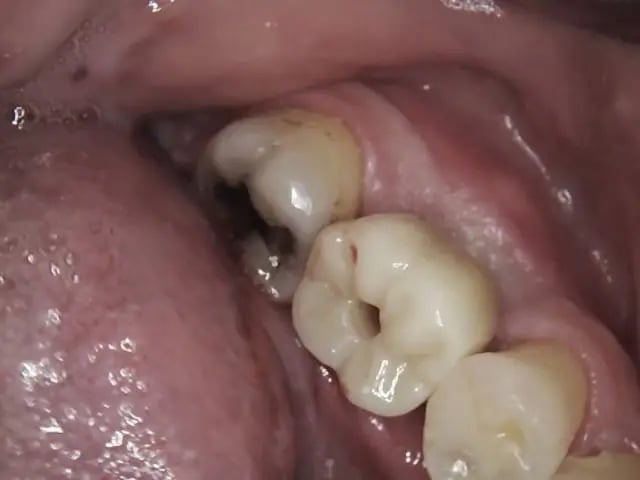
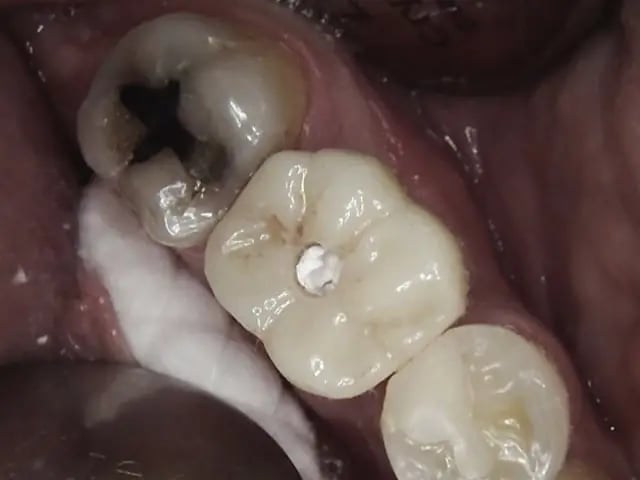
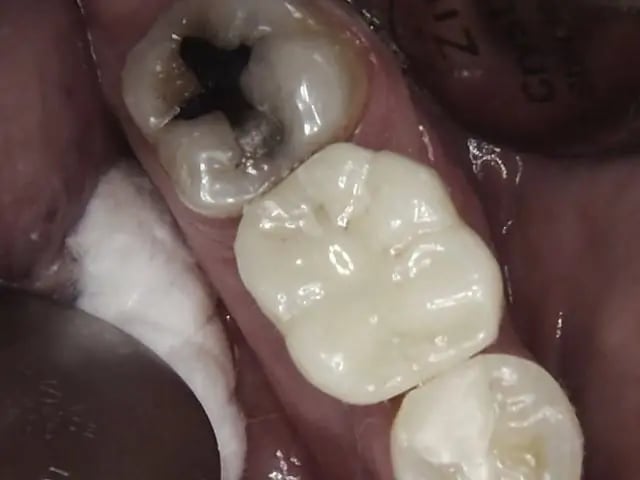
- Remove the healing cap
- Try in the crown and check proximal contacts — floss should have a passive snap
- If contacts are tight, remove the crown and adjust with a green stone until proper flossing is achieved (This may take several attempts until right)
- Take an X-ray to confirm the crown is fully seated
- Show the patient to confirm they are happy with the esthetics
- Check occlusion and adjust as needed
- Place a new screw and torque it to the manufacturer’s recommendation
- Place the Teflon into the screw access hole
- Dry, bond, and light cure
- Place a layer of OMNICHROMA BLOCKER and light cure
- Place the final layer of OMNICHROMA Flow BULK and light cure
- Recheck and adjust occlusion and polish
 |
 |
 |
This is a workflow I have performed many times, and I follow it the same way every time. I don’t skip steps. Each part of the process builds on the previous one.
I also review this workflow with my assistants, so they know exactly what to expect during the procedure. Because it is documented, the process becomes much easier to teach. If there is staff turnover, onboarding a new assistant becomes significantly faster because the workflow is already written out.
Instead of learning through trial and error, the new team member can study the process and understand the sequence before even assisting with the procedure.
Over time, these clinical SOPs become part of the office culture. Procedures run more smoothly. The team becomes more confident. Patients have a better experience.
And perhaps most importantly, the dentist feels less stressed because they have a predictable workflow to follow.